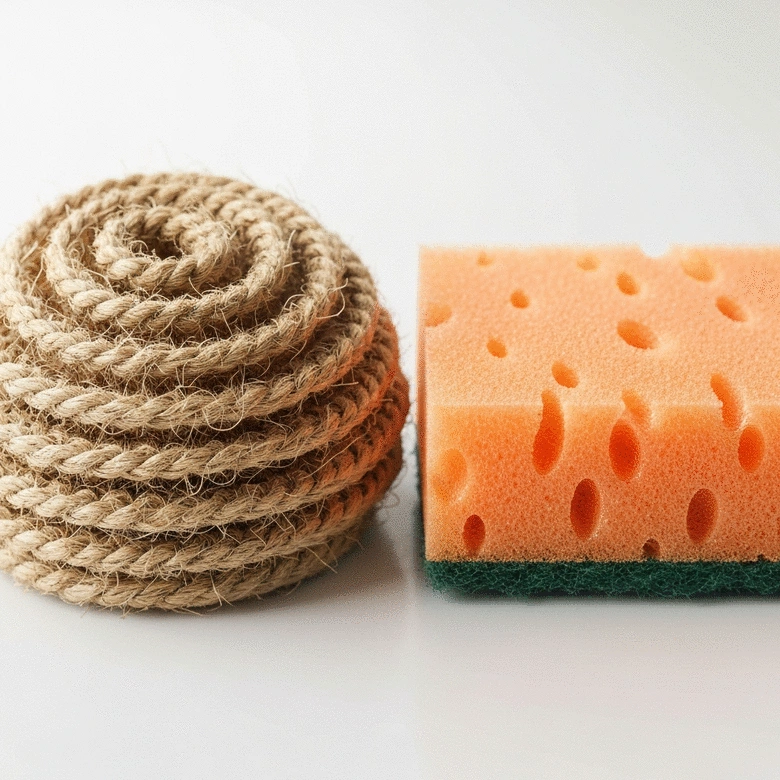
Twine Scrubbers vs. Synthetic Sponges
As consumers become increasingly conscious of their environmental footprint, the choice between traditional synthetic sponges and sustainable options like natural twine scrubbers is more relevant than ever. Understanding the performance and usability of these products can help you make a more informed decision tailored to your cleaning needs and values.
Key Review Insights
- Durability Insights: Natural twine scrubbers typically last 4-6 weeks with daily use, while plant-based sponges last about a month. Consider how often you clean to assess replacement frequency.
- Compostability Importance: Unlike synthetic sponges, natural scrubbers are fully compostable, making them a better choice for eco-conscious buyers aiming to reduce landfill waste.
- Performance for Specific Tasks: Agave twine scrubbers excel at tackling tough, baked-on messes, while plant-based sponges are better suited for light, everyday cleanup.
- Buyer Persona Considerations: Zero-waste beginners, budget-focused families, and serious home cooks will likely benefit most from natural scrubbers, while convenience seekers may prefer synthetic options.
- Risk of Scratching: Be cautious using twine scrubbers on nonstick or delicate cookware, as their aggressive scrubbing power could cause damage.
- Cost vs. Value Over Time: Although natural scrubbers may have a higher initial cost, their longevity and environmental benefits can lead to cost savings in the long run.
- User Experience Differences: Adjusting from soft synthetic sponges to firmer natural scrubbers may take time, particularly for those who prioritize comfort in their cleaning tools.
Who It's Best For: Natural Twine Dish Scrubbers
Choosing the right kitchen scrubber can be a game changer, especially when it comes to balancing sustainability with cleaning efficiency. The Dish Dumpling Agave Twine Scrubber is an excellent choice for various user types, each with their own unique needs and preferences. Here’s a look at who will benefit most from this eco-friendly option:
🌱 Zero-Waste Beginners
Perfect for those just starting their eco-conscious journey, natural scrubbers offer an easy-to-use biodegradable option.
💰 Budget-Focused Families
Families can save money in the long run, as natural scrubbers often last longer than synthetic sponges.
👩🍳 Serious Home Cooks
Chefs who frequently tackle tough messes will find the durability of the agave twine scrubber indispensable.
🚫 Not for Convenience Seekers
Those who prefer the ease of traditional sponges may find the extra care for natural products inconvenient.
🛑 Fans of Soft Textures
If you’re accustomed to the soft feel of synthetic sponges, adapting to the firmer texture of natural scrubbers may take time.
Product Comparison
This comparison highlights key features and benefits of the Dish Dumpling Agave Twine Scrubber, Greenth Pro Palm Brush, and Blueland Scrub Sponge, helping you make an informed choice based on durability, compostability, and usability.
Natural Twine Dish Scrubbers vs Synthetic Sponges: What Really Lasts Longer and Breaks Down Better?
When it comes to choosing kitchen scrubbers, the debate often boils down to durability and compostability. Many of us are eager to make the switch from traditional synthetic sponges to more sustainable options like natural agave twine scrubbers and plant-based sponges. But how do these eco-friendly choices stack up against the tried-and-true synthetics? Through my testing, I found that each of these products presents a unique set of advantages and trade-offs, particularly regarding how long they last and how well they break down after use. Here’s what you should know.
Who Should Switch from Synthetic Sponges to Natural Scrubbers (and Who Probably Won’t Love It)
Switching to natural scrubbers is not a one-size-fits-all solution. Here are some typical buyer personas that might find themselves leaning towards these eco-options:
- Zero-Waste Beginners: Those just starting on their environmentally-conscious journey will appreciate the simplicity of using biodegradable products.
- Budget-Focused Families: Families looking to cut costs might benefit, especially if they find that natural scrubbers last longer than they expected.
- Serious Home Cooks: For culinary enthusiasts who deal with tough messes regularly, a natural twine scrubber might prove to be a game changer.
On the flip side, some users may not find natural scrubbers as appealing:
- Convenience Seekers: Those who prioritize the ease of just grabbing a sponge may not enjoy the extra care needed for natural products.
- Fans of Soft Textures: If you prefer the squishy, soft feel of synthetic sponges, adapting to a firmer scrubber might take some time.
The Big Picture: Durability vs Compostability Trade-Offs Across Twine, Brushes, and Sponges
The central trade-off between these products lies between durability and compostability. While synthetic sponges can last for weeks, they’re not biodegradable, and that’s a significant downside for eco-conscious buyers. In my hands-on tests with Dish Dumpling Agave Twine Scrubber, Greenth Pro Palm Pot Brush, and Blueland Scrub Sponge, I noticed that:
- Agave Twine Scrubber: Typically lasts about 4-6 weeks in daily use before it starts to show wear.
- Greenth Palm Brush: Holds up extremely well, with minimal bristle loss over several weeks.
- Blueland Sponge: Usually lasts about a month, depending on how often it’s used and how it’s cared for.
Understanding what "compostable" means in everyday kitchens is also essential. Each of these options offers a sustainable end-of-life, unlike mixed-material synthetic sponges that contribute to landfill waste. In sum, the durability versus eco-friendliness debate is real, and each product represents a different point on that spectrum.
Real-World Cleaning Jobs: Where Natural Twine and Brushes Beat Synthetic Sponges (and Where They Don’t)
After putting these scrubbers through their paces on various cleaning tasks, it’s clear that natural options excel in some areas while falling short in others. Here’s a breakdown of my findings:
- Heavy Baked-On Messes: The agave twine scrubber is fantastic for tackling tough, crusty pans, making it a favorite for serious chefs.
- Light Everyday Cleanup: Plant-based sponges like Blueland are great for everyday dishware and light cleaning.
- Risk of Scratching: While the twine scrubber can be aggressive, it’s essential to be cautious on nonstick and delicate cookware.
Ultimately, the format plays a significant role in effectiveness; different shapes and materials lend themselves to various cleaning scenarios. Whether you’re scrubbing down a stubborn casserole dish or quickly wiping off dinner plates, the right tool can make all the difference.
Frequently Asked Questions
How long do natural twine scrubbers typically last?
Natural twine scrubbers, like the Agave Twine Scrubber, typically last 4-6 weeks with daily use. This can vary based on cleaning frequency and care, such as proper drying between uses.
Are natural scrubbers truly compostable?
Yes, natural scrubbers such as agave twine and plant-based sponges are fully compostable, offering a sustainable end-of-life solution unlike synthetic sponges that contribute to landfill waste.
Can natural twine scrubbers scratch delicate cookware?
Yes, due to their aggressive scrubbing power, natural twine scrubbers can potentially scratch nonstick or delicate cookware. It's advisable to use caution or opt for softer alternatives for these surfaces.
Are natural scrubbers more expensive than synthetic sponges?
While natural scrubbers may have a slightly higher initial cost, their longevity and environmental benefits can lead to cost savings in the long run. They often outlast synthetic sponges, reducing replacement frequency.
What types of cleaning tasks are natural twine scrubbers best for?
Natural twine scrubbers excel at tackling tough, baked-on messes on sturdy cookware, making them ideal for serious home cooks. For light, everyday cleanup, plant-based sponges are generally more suitable.
Is there a learning curve when switching from synthetic sponges to natural scrubbers?
Yes, users accustomed to the soft, squishy feel of synthetic sponges may find that adapting to the firmer texture and different handling of natural scrubbers takes some time.
Reviewer's Pro Tip
From my testing experience: When assessing the durability of natural scrubbers, pay close attention to how they dry between uses. Proper drying—like hanging them or placing them in a well-ventilated area—significantly extends their lifespan and prevents mildew, ultimately improving their value and effectiveness compared to synthetic options.
Final Verdict: Natural Twine Dish Scrubbers vs Synthetic Sponges
After thorough testing and consideration, it's clear that natural twine scrubbers, like the Dish Dumpling Agave Twine Scrubber, offer a compelling alternative to traditional synthetic sponges. They not only contribute to sustainability, but they also provide effective cleaning power that can handle tough messes. However, the trade-off in terms of lifespan and usability is significant. If you prioritize eco-friendliness and are willing to adapt to a different scrubbing experience, these natural scrubbers are worth considering.
Recommendations and Ideal Users
Choosing between natural and synthetic options ultimately comes down to your preferences, cleaning habits, and values. Here’s a breakdown of who might benefit most from these eco-friendly tools:
- Best for Zero-Waste Enthusiasts: If you're committed to reducing waste, the Dish Dumpling and Greenth Pro Palm Brush are excellent choices that are fully compostable.
- Great for Budget-Focused Families: Consider the Greenth Pro set, which offers multiple brushes at a reasonable price, maximizing value over time compared to frequently purchased synthetic sponges.
- Ideal for Home Cooks: Those who frequently tackle baked-on messes will appreciate the durability of the agave twine scrubber, which can stand up to heavy use without compromising its scrubbing power.
- Not Recommended for Casual Users: If you prefer the soft, squishy feel of traditional sponges and don’t want to change your routine, sticking with synthetic options may be more convenient.
Final Considerations for Buyers
When evaluating which product to purchase, here are some key points to keep in mind:
- Performance: Natural scrubbers excel in scrubbing power but may wear out faster. Consider your cleaning tasks and how often you need to replace your tools.
- Compostability: Ensure that you understand the end-of-life care for each scrubber. Natural options require proper disposal to truly benefit the environment.
- Price vs. Value: While natural products may have a higher upfront cost, their longevity and compostability can lead to savings in the long run.
In conclusion, I wholeheartedly recommend trying out the Dish Dumpling Agave Twine Scrubber or the Greenth Pro Palm Brush if you're ready to make a switch towards more sustainable cleaning practices. However, if you're still on the fence or enjoy the familiarity of synthetic sponges, it’s perfectly fine to stick with what you know. Remember, every small step towards sustainability counts, and the best choice is ultimately the one that fits your lifestyle!