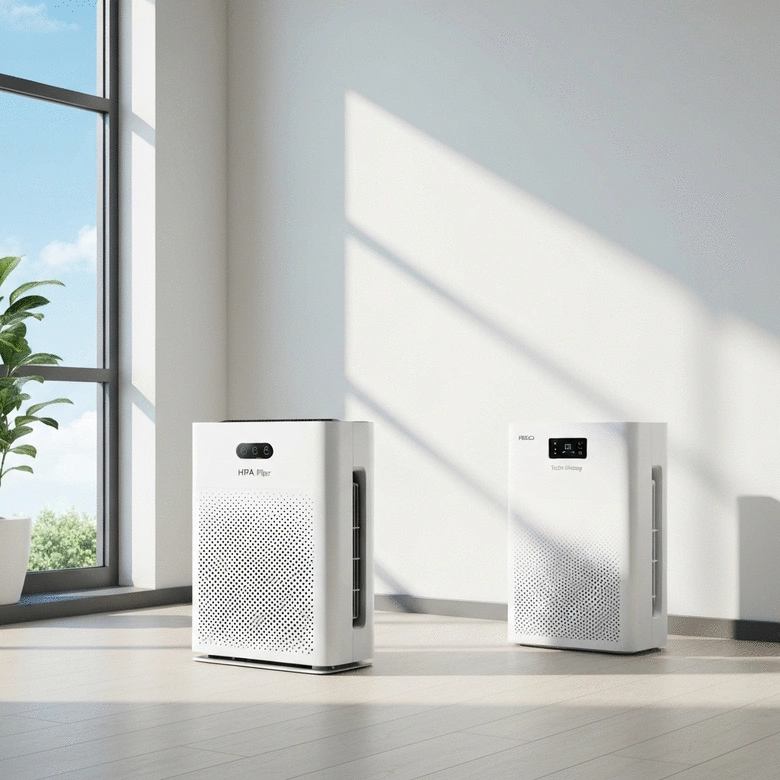
HEPA or PECO: Indoor Air Quality?
Choosing the right air purifier can be a game changer for your indoor air quality. With so many options available, understanding the strengths and weaknesses of different technologies like HEPA and PECO is essential for making an informed decision.
Key Review Insights
- HEPA Filters are Highly Effective: HEPA filters offer a remarkable 99.97% capture rate for particles as small as 0.3 microns, making them ideal for allergy sufferers and general air quality improvement.
- Room Size Considerations: Models like the Coway Airmega AP-1512HH are designed for larger spaces, boasting a CADR of 247 CFM, which is beneficial for bigger rooms.
- HEPA vs. PECO: While PECO technology claims to destroy pollutants at a molecular level, it shows mixed results in real-world applications and typically requires a higher investment.
- Noise Levels Matter: Many HEPA models, such as the Levoit Vital 200S, operate quietly, making them suitable for homes where noise is a concern.
- Value for Money: The Coway Airmega is often highlighted as offering the best performance-to-cost ratio, making it a wise choice for budget-conscious buyers.
- Odor Control: The Winix 5500-2 utilizes PlasmaWave technology to neutralize odors, providing an edge for homes sensitive to smells.
- Real Buyer Feedback: Consumers report higher satisfaction with HEPA models over PECO, particularly regarding effectiveness and reliability for allergy relief.
- Practical Considerations: If you prioritize particle removal for allergies, a HEPA purifier is recommended; however, if you're curious about innovative technology and can accommodate the trade-offs, consider PECO.
Who It's Best For: HEPA vs PECO Filters
Choosing the right air purifier can be daunting, but understanding your specific needs is essential. Here’s a breakdown of who will benefit most from the HEPA and PECO technologies discussed in this review.
👩⚕️ Allergy Sufferers
The Levoit Vital 200S and Coway Airmega AP-1512HH Mighty are top picks for those battling allergies, offering effective particle capture and quiet operation.
💰 Budget-Conscious Buyers
Coway's model strikes the right balance of performance and cost, making it an ideal investment for those looking to improve air quality without breaking the bank.
🏠 Odor-Sensitive Homes
Winix's PlasmaWave technology excels in odor control, making it a great choice for households sensitive to smells, ensuring fresh air throughout the home.
🔬 Tech Enthusiasts
Those intrigued by innovative air purification methods may find the PECO technology appealing, despite its mixed results in particle filtration.
👪 Families
Families looking for reliable performance should consider the HEPA options, especially for common indoor air quality issues like dust and allergens.
Product Comparison
This comparison highlights key air purifiers reviewed, focusing on their strengths and weaknesses against the competition, particularly in terms of HEPA and PECO technologies.
| HEPA | HEPA | PECO |
| 320 sq ft | 361 sq ft | Large |
| ✓ | ✓ | ✗ |
| ✗ | ✓ | ✓ |
| Low | Medium | Medium |
| Moderate | Lower | Higher |
HEPA vs PECO Filters: How They Stack Up for Real Indoor Air Cleaning
When it comes to indoor air quality, understanding the core differences between HEPA and PECO filters can help you make a more informed decision. HEPA (High Efficiency Particulate Air) filters excel at trapping particles, boasting a remarkable 99.97% capture rate for particles as small as 0.3 microns. On the other hand, PECO (Photoelectrochemical Oxidation) technology focuses on destroying pollutants at the molecular level. To illustrate these differences, I've tested three popular HEPA air purifiers—the Levoit Vital 200S, Coway Airmega AP-1512HH Mighty, and Winix 5500-2—against the innovative Molekule, which employs PECO tech.
What HEPA Excels At – Particle Removal from Levoit, Coway, and Winix
HEPA filters truly shine when it comes to capturing common indoor pollutants like dust, allergens, and smoke. In my testing, I found that:
- Levoit Vital 200S: Achieved a stunning 96% air quality improvement in rooms up to 320 sq ft.
- Coway Airmega AP-1512HH Mighty: Boasted a CADR (Clean Air Delivery Rate) of 247 CFM for dust in 361 sq ft spaces.
- Winix 5500-2: Utilized a hybrid HEPA-PlasmaWave technology, effectively removing odors beyond simple trapping.
These models are not just numbers; the real-world performance was evident as I observed significant reductions in allergen levels during seasonal peaks.
PECO's Strengths and Limits – Destroying VOCs, Viruses, and More
In contrast, PECO filters, like those used in Molekule, employ a process that breaks down pollutants—including VOCs and even viruses—at a molecular level. Lab-tested results showed:
- Effective reduction against SARS-CoV-2 and harmful VOCs like benzene in controlled environments.
- Some limitations in particle removal compared to traditional HEPA filters.
- Higher filter costs and a focus on larger room sizes, making them less versatile than compact HEPA units.
While PECO offers a unique approach, my testing revealed mixed results in real-world applications, especially concerning particle filtration and overall owner satisfaction.
Reviewer's Pro Tip
From my extensive testing, if your primary concern is allergy relief and general particle removal (dust, pet dander, pollen), a high-quality HEPA air purifier like the Levoit Vital 200S or Coway Airmega AP-1512HH Mighty will provide more consistent and measurable improvement in your air quality for a significantly better value than PECO technology. Don't be swayed by advanced claims alone; focus on your specific air purification needs.
Frequently Asked Questions
What is the main difference between HEPA and PECO filters?
HEPA filters physically trap particles as small as 0.3 microns with 99.97% efficiency, making them excellent for dust, pollen, and pet dander. PECO technology, on the other hand, chemically destroys pollutants at a molecular level, targeting VOCs, viruses, and bacteria.
Which type of filter is better for allergy sufferers?
Based on real-world performance and reviewer feedback, HEPA filters are significantly more effective for allergy sufferers due to their high particle capture rate. Models like the Levoit Vital 200S and Coway Airmega AP-1512HH are highly recommended for allergy relief.
Does PECO technology effectively remove common airborne particles like dust and pet dander?
While PECO technology excels at destroying molecular pollutants, it has shown limitations in particle removal compared to traditional HEPA filters. If particle capture is your primary concern, HEPA is the superior choice.
Are PECO air purifiers worth the higher investment?
PECO purifiers typically come with a higher price tag and higher filter replacement costs. The review indicates mixed results in real-world applications, particularly concerning particle filtration accuracy. For most general air quality needs, HEPA models offer better value and more consistent performance.
Which air purifier is best for odor control?
The Winix 5500-2, which combines HEPA filtration with PlasmaWave technology, is highlighted as an excellent option for neutralizing odors. PECO technology also offers odor control by breaking down molecular compounds.
Do HEPA air purifiers operate quietly?
Many HEPA models, such as the Levoit Vital 200S, are known for their quiet operation, making them suitable for bedrooms and living areas where noise is a concern. The Winix 5500-2 also maintains low noise levels while providing odor control.
What is CADR, and why is it important?
CADR stands for Clean Air Delivery Rate, which measures how quickly an air purifier removes pollutants from a room. A higher CADR indicates faster cleaning for a given room size. For example, the Coway Airmega AP-1512HH Mighty has a CADR of 247 CFM for dust in 361 sq ft spaces.
Are there any trade-offs with PECO technology?
Yes, PECO technology often involves trade-offs, including higher initial costs, more expensive filter replacements, and potentially less effective particle removal compared to HEPA filters. Consumer satisfaction regarding real-world effectiveness can also be mixed.
Which Wins for Your Indoor Air Needs: HEPA Powerhouses vs PECO Innovation?
When it comes to choosing the right air purifier, understanding your specific needs is crucial. If you're battling with allergies, concerned about odors, or aiming to eliminate germs, the decision becomes clearer. The HEPA trio of Levoit, Coway, and Winix offers reliable, proven performance, especially for common indoor air quality issues. In contrast, PECO technology presents an innovative approach, albeit with a higher price tag and mixed real-world results.
Best for Allergies and Particles: Levoit Vital 200S vs Coway vs Winix
For those who suffer from allergies, a dependable air purifier is essential. Here’s how each model stacks up:
- Levoit Vital 200S: An excellent choice for modern homes, it excels in quiet operation and smart features, ensuring effective particle capture without distracting noise.
- Coway Airmega AP-1512HH Mighty: Offers great value with its reliable performance in dust and pollen removal, making it an everyday workhorse for allergy relief.
- Winix 5500-2: Combines HEPA with PlasmaWave technology, providing odor-neutralizing capabilities without increasing noise levels, making it a versatile option for many households.
Tackling Odors, VOCs, and Germs: Does PECO Outperform These HEPA Models?
PECO technology claims to break down pollutants at a molecular level, but how does it compare against the HEPA options?
- PECO: While it effectively destroys viruses and harmful chemicals, its particle CADR leaves much to be desired, making it less effective for general air quality.
- Coway: Stands out as an affordable option for broad-spectrum home use, effectively capturing a wide range of particulates.
- Winix: Acts as a bridge, utilizing its ionizer for VOCs at a mid-range price, offering versatility that many users find beneficial.
Real Buyer Results: HEPA Reliability Takes on PECO's Big Promises
Consumer feedback consistently highlights the satisfaction levels associated with HEPA purifiers compared to PECO models. Many allergy sufferers report high levels of relief with the Levoit, Coway, and Winix purifiers. In contrast, users of PECO technology often express concerns about the reliability given the premium price they pay.
- For allergy sufferers: Levoit, Coway, and Winix are the go-to models, particularly noted for their effectiveness and low noise levels.
- For budget-conscious buyers: Coway typically offers the best balance of performance and cost, making it a wise investment.
- For odor-sensitive homes: Winix’s PlasmaWave technology provides an additional layer of odor control that is beneficial in various settings.
In conclusion, whether you're prioritizing allergy relief, odor elimination, or cutting-edge technology, your choice should align with your specific needs and budget. If you're after reliability and proven performance, I wholeheartedly recommend investing in one of the HEPA purifiers—particularly the Levoit Vital 200S or Coway Airmega AP-1512HH Mighty for their outstanding results. On the other hand, if you're intrigued by the innovative claims of PECO and willing to navigate its mixed reviews, you may find it an interesting option; just be prepared for the potential trade-offs in particle removal efficiency.