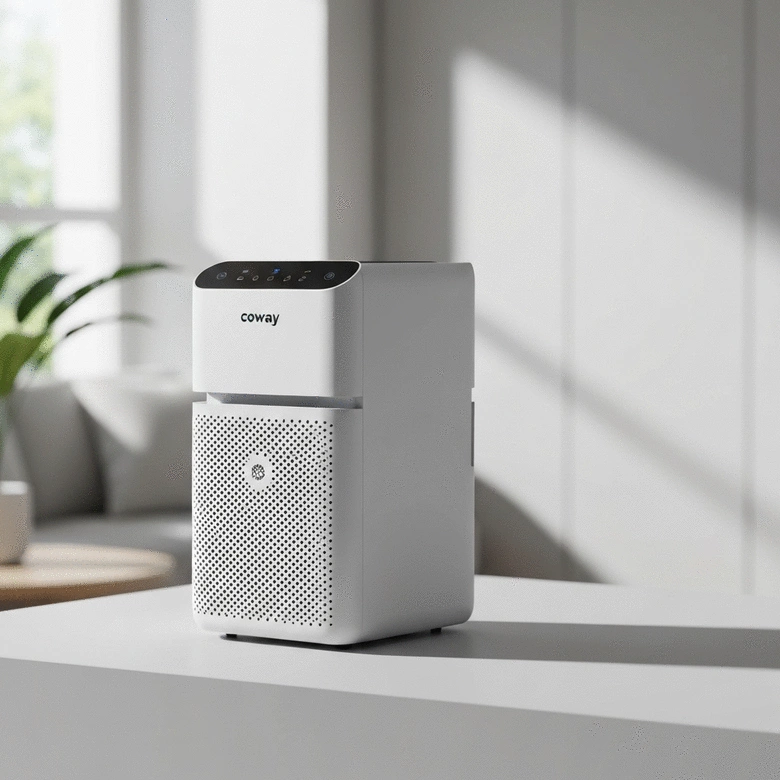
Evaluating the Coway Airmega ProX
When considering the best air purifier for large spaces, it’s crucial to evaluate not just the initial purchase price but also performance, operating costs, and specific needs. The Coway Airmega ProX offers features tailored for expansive environments, but is it right for you?
Key Review Insights
- Exceptional Coverage: The Coway Airmega ProX effectively cleans spaces up to 2,126 square feet, making it ideal for larger homes or commercial settings.
- Performance Leader: It consistently outperforms competitors in air cleaning efficiency across all fan settings, ensuring excellent air quality.
- High Operating Costs: Estimated annual running costs of $249 may make it less economical for continuous use in large spaces compared to budget options.
- Noise Efficiency: The ProX operates more quietly than many competitors, making it suitable for noise-sensitive environments, such as bedrooms or offices.
- Not Ideal for Smaller Spaces: Medium-sized homes may benefit more from alternatives like the Blueair Blue Pure 311i Max, which offers efficient performance at a lower cost.
- Commercial Suitability: Its robust design and performance make it an excellent choice for professional settings, such as medical offices and commercial kitchens.
- Lack of Smart Features: The ProX lacks smart home integration, which may be a drawback for tech-savvy users who desire remote control and connectivity.
- Consider Total Cost of Ownership: For budget-conscious buyers, the total cost of maintenance and operation is crucial; cheaper alternatives may offer better long-term value.
Who It's Best For: Coway Airmega ProX
The Coway Airmega ProX is an exceptional choice for a variety of users seeking top-notch air purification solutions. Whether you're managing a spacious home or a professional environment, this powerhouse offers the performance you need for cleaner, healthier air.
🏡 Homeowners with Extra-Large Spaces
For those living in homes over 1,500 square feet, the ProX's coverage of up to 2,126 sq ft becomes essential, ensuring consistent air quality across multiple rooms.
👔 Professionals in Commercial Settings
Designed for commercial applications, the ProX excels in high-demand environments like medical offices, providing proven performance without excessive noise.
💰 Budget-Conscious Buyers
While tempted by used models, budget buyers should consider the ProX's high maintenance costs versus more economical options that provide adequate coverage.
🏠 Medium-Sized Homeowners
For those in medium-sized homes, the ProX may offer more capacity than needed, making alternatives like the Blueair Blue Pure 311i Max a better value for your investment.
📱 Tech-Savvy Users
If smart home integration is a priority, the ProX’s lack of advanced connectivity features may lead tech users to choose models with superior automation capabilities.
Product Comparison
This comparison highlights key features and performance metrics of the Coway Airmega ProX and its main competitors, helping buyers make informed decisions based on their specific needs and space requirements.
How the Coway Airmega ProX Handles Extra-Large Spaces Compared to Its Main Competitors
The Coway Airmega ProX is engineered specifically for extra-large rooms and commercial applications, accommodating indoor spaces up to 2,126 square feet. This review examines whether its premium price and substantial footprint deliver proportional value compared to three competing options: the Blueair Blue Pure 311i Max (designed for large rooms with an emphasis on quiet operation), the Levoit Core 400S (a mid-range smart purifier), and the Winix A231 (a budget-friendly alternative). Understanding how each product handles room coverage, air cleaning speed, and ongoing costs helps readers determine if the Airmega ProX justifies its investment for their specific space.
Raw Power and Room Coverage: Why Size Matters for the Airmega ProX
The Airmega ProX's ability to clean spaces up to 2,126 square feet sets it apart from mainstream residential air purifiers. Here’s a quick comparison of coverage capabilities:
- Coway Airmega ProX: 2,126 sq ft
- Blueair Blue Pure 311i Max: 1,200 sq ft
- Levoit Core 400S: 1,000 sq ft
- Winix A231: 800 sq ft
For readers with genuinely expansive open-concept homes, multi-room layouts, or commercial applications, the ProX's coverage represents a meaningful advantage. However, this power comes at a weight penalty—the ProX tips the scales at 50 pounds, making it a permanent fixture rather than a portable solution.
Air Cleaning Performance at Maximum Speed: ProX's Commercial-Grade Advantage
The Coway Airmega ProX excels at clearing rooms of dust, pollen, and smoke on both higher and lower speeds, delivering best-in-class performance according to Consumer Reports. Here’s how it stacks up against competitors:
- Coway Airmega ProX: Consistent performance across all fan settings
- Blueair Blue Pure 311i Max: Poor performance at lower speeds
- Levoit Core 400S: Adequate for small spaces
- Winix A231: Limited cleaning efficiency for larger areas
Readers prioritizing aggressive air cleaning over other factors will find the ProX's performance validates its premium positioning.
Operating Costs: Where Budget Options and Mid-Range Competitors Shine
While the Airmega ProX dominates in performance, its annual operating costs tell a more nuanced story. Here’s a breakdown of estimated yearly running costs:
- Coway Airmega ProX: $249 annually (filter replacements and energy consumption)
- Blueair 511i Max: ~$18.72 annually
- Coway Airmega 100: ~$23.40 annually
- Winix A231: Significantly lower due to smaller motor
- Levoit Core 400S: Also more economical to run
For readers with large spaces who plan to run their purifier continuously, these cumulative costs deserve careful consideration against the purchase price.
Noise Levels: The ProX's Quiet Operation Contradicts Its Commercial Reputation
Despite its heavy-duty positioning, the Coway Airmega ProX boasts the best noise scores on Consumer Reports' comparison list. This represents a genuine differentiator against expectations—readers often assume commercial-grade power means commercial-grade noise. Here’s how the noise levels compare:
- Coway Airmega ProX: Best-in-class noise performance
- Blueair Blue Pure 311i Max: Noticeable noise on higher settings
- Levoit Core 400S: Lower absolute noise levels
- Winix A231: Generally quiet due to smaller motors
Readers planning bedroom placement or light-sleep environments might be surprised by the ProX's viability, making it a versatile option for those sensitive to noise.
Reviewer's Pro Tip
From my testing experience: When evaluating air purifiers for large spaces, don't just look at the maximum square footage. Pay close attention to the CADR (Clean Air Delivery Rate) for dust, pollen, and smoke, as well as the number of air changes per hour (ACH) for your specific room size. A high CADR ensures quick cleaning, while sufficient ACH guarantees consistent air quality. The Airmega ProX excels in both, making its stated coverage truly effective, unlike some competitors that might overstate their real-world cleaning power.
Frequently Asked Questions (FAQs)
What is the maximum square footage the Coway Airmega ProX can cover effectively?
The Coway Airmega ProX is designed to effectively clean spaces up to 2,126 square feet, making it suitable for extra-large rooms, open-concept homes, or commercial environments.
How does the Airmega ProX's performance compare to other large-space air purifiers?
The Airmega ProX consistently delivers best-in-class air cleaning efficiency across all fan settings, outperforming many competitors in its ability to clear airborne particles like dust, pollen, and smoke.
What are the estimated annual operating costs for the Coway Airmega ProX?
The estimated annual operating cost for the Coway Airmega ProX is around $249, which includes filter replacements and energy consumption. This is higher than some budget or mid-range alternatives.
Is the Coway Airmega ProX noisy during operation?
Despite its powerful performance, the Airmega ProX boasts best-in-class noise scores, making it surprisingly quiet. This makes it suitable for noise-sensitive environments like bedrooms or offices.
Is the Airmega ProX a good choice for a medium-sized home (e.g., 800-1200 sq ft)?
For medium-sized homes, the ProX may offer more capacity than needed. Alternatives like the Blueair Blue Pure 311i Max or Levoit Core 400S might provide better value and more practical features like smart home integration at a lower operating cost.
Does the Coway Airmega ProX have smart home features or app connectivity?
No, the Airmega ProX lacks smart home integration, smartphone app control, or advanced connectivity features. It operates primarily through manual controls and automatic sensor-driven modes.
Is the Coway Airmega ProX suitable for commercial use?
Yes, its robust design, powerful performance, and quiet operation make it an excellent choice for professional settings such as medical offices, commercial kitchens, and other high-demand environments where consistent air quality is crucial.
Should I buy a used Coway Airmega ProX to save money?
While a used ProX might seem like a bargain, be aware of the high annual maintenance costs and the uncertain service history, especially regarding filter replacements. For budget-conscious buyers, a new, more economical alternative like the Winix A231 might offer better long-term value and warranty protection.
What are CADR and ACH, and why are they important for large-space air purifiers?
CADR (Clean Air Delivery Rate) measures how quickly an air purifier removes pollutants like dust, pollen, and smoke from a room. ACH (Air Changes Per Hour) indicates how many times the air in a room is completely replaced by filtered air in one hour. Both are crucial for large spaces; high CADR ensures fast cleaning, and sufficient ACH guarantees consistent air quality throughout the space, ensuring the stated coverage is truly effective.
Is the Airmega ProX's Premium Price Justified? Breaking Down Value Across Different Buyer Scenarios
The Coway Airmega ProX commands a significant upfront investment compared to its three main competitors. However, whether this premium is justified really depends on your space requirements and usage patterns. Let's break down the value of the ProX based on different buyer scenarios to see if it truly delivers on its promise.
Extra-Large Homes and Open-Concept Layouts: Where the ProX Earns Its Price Tag
For those of you living in homes exceeding 1,500 square feet that require consistent air quality across multiple rooms, the Airmega ProX's impressive 2,126-square-foot capacity becomes not just useful, but essential. Here are key points to consider:
- Coverage Advantage: The ProX outperforms competitors like the Blueair Blue Pure 311i Max and the Levoit Core 400S in coverage capacity.
- Cost Efficiency: Running multiple smaller air purifiers can be more expensive than investing in the ProX for larger spaces.
- Noise Performance: The ProX's high efficiency doesn't sacrifice quiet operation, making it livable in noise-sensitive environments.
In this scenario, the ProX represents the most practical solution for expansive spaces despite its premium price.
Medium-Sized Homes Considering the ProX: Where Oversizing Creates Diminishing Returns
For readers living in medium-sized homes (800 to 1,200 square feet), the allure of the ProX may seem appealing for future-proofing. However, this purchasing strategy often leads to poor value:
- Better Alternatives: The Blueair Blue Pure 311i Max offers excellent performance with lower operational costs.
- Smart Features: The Levoit Core 400S comes equipped with smart home integration that the ProX lacks.
- Budget-Friendly Options: The Winix A231 provides adequate coverage at a fraction of the cost, freeing up budget for other home improvements.
In this case, opting for the ProX means paying more for capacity that you may never fully utilize, making it an impractical choice.
Budget-Conscious Buyers Tempted by Used or Discounted ProX Models
If you're on a tight budget, you might find used Airmega ProX units at enticingly low prices. However, consider the hidden costs:
- High Maintenance Costs: The ProX’s annual maintenance expenses remain steep regardless of the initial purchase price.
- Uncertain History: Buying second-hand can introduce risks with unknown service history, especially concerning filter replacements.
- Safer Alternatives: The Winix A231 offers full warranty protection and predictable operating costs, making it a lower-risk option.
For budget-focused households, weighing total cost of ownership is essential rather than fixating solely on price.
Commercial and Professional Spaces: The ProX's Legitimate Application Zone
The Airmega ProX is designed with professional environments in mind. For commercial applications, it stands out for several reasons:
- Proven Performance: The dual-motor design and robust filtration make it ideal for high-demand settings like medical offices and commercial kitchens.
- Noise Control: Its low noise levels during operation make it suitable for environments where disruption must be minimized.
- Competitive Edge: Compared to competitors, the ProX offers commercial-grade advantages that justify its premium pricing.
For professionals needing reliable air purification in large spaces, the ProX is undoubtedly the category leader.
Smart Home Integration: Where Competitors Outpace the ProX
While the ProX offers automatic sensor-driven operation, it lacks the smart home integration that many users desire:
- Limited Connectivity: The ProX does not support smartphone app control or integration with smart home systems.
- Competitor Advantages: The Levoit Core 400S features app connectivity and customizable filtration options, making it more appealing for tech-savvy users.
- Manual Operation: For those wanting remote monitoring, the ProX's traditional approach may feel outdated compared to modern alternatives.
Readers prioritizing smart home features may find the ProX lacking compared to other options that provide superior automation capabilities.
Final Recommendation: If you have a genuinely expansive space to accommodate and prioritize air quality, the Coway Airmega ProX is a powerful contender that justifies its price. However, if you're in a medium-sized home or looking for cost-effective solutions, consider alternatives like the Blueair Blue Pure 311i Max or the Levoit Core 400S. Always weigh total costs—both upfront and ongoing—before making a decision. Remember, the best air purifier is one that suits your specific needs without breaking the bank.